Home Staging in Portugal: A Guide for International Sellers
RE/MAX CIDADELA
Last update: 2026-07-11
RE/MAX CIDADELA
Last update: 2026-07-11
Selling a property in Portugal involves more than choosing an asking price and publishing an online listing. Buyers form an opinion within seconds of seeing the first photographs, and that initial impression often determines whether they request a viewing or continue scrolling.
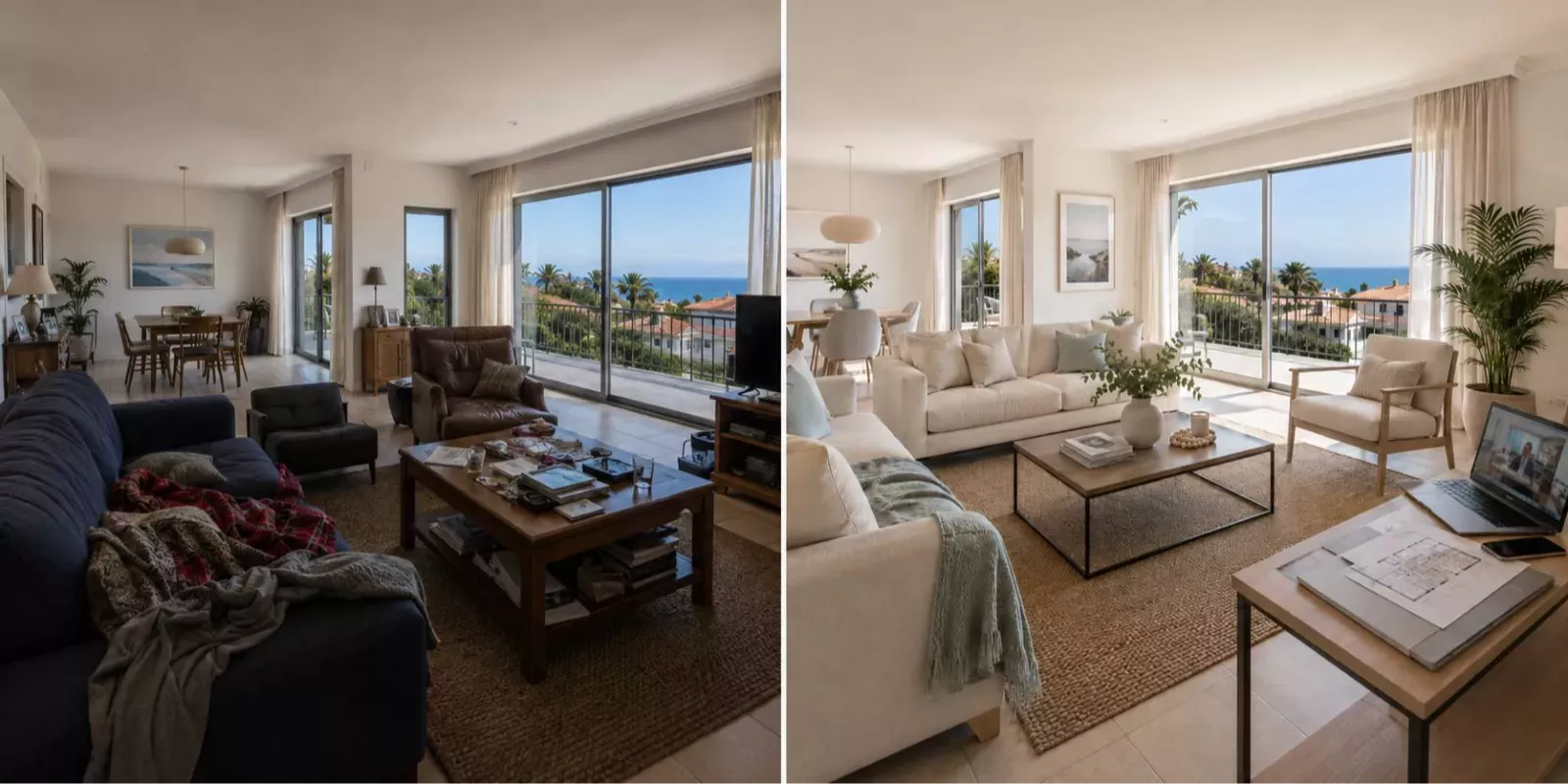
Home staging is the process of preparing a property so that buyers can understand its space, recognise its strengths and imagine themselves living there. For international owners, it can be particularly valuable because the property may need to be prepared, photographed and maintained without their daily involvement.
This applies both to foreign owners living in Portugal and to non-resident owners managing the sale from abroad. The level of preparation required will depend on the condition of the home, whether it is occupied or vacant, its target buyer and the price segment in which it will compete.
International research supports the importance of presentation. In the National Association of REALTORS®’ 2025 survey, 83% of buyers’ agents said staging made it easier for buyers to visualise a property as their future home. Twenty-nine per cent of agents reported increases of between 1% and 10% in the value offered, while 49% observed some reduction in time on the market. These are US findings and should not be treated as guaranteed results for Portugal, but they demonstrate how presentation can influence buyer behaviour.
At RE/MAX Cidadela, we have worked in the property markets of Cascais, Estoril, Oeiras, Lisbon and Sintra since 2004. During that time, we have helped more than 4,800 families buy or sell property, including international owners who needed to coordinate the process from another country.
This guide explains what home staging involves, how much it may cost, when it is worth considering and how to manage the process locally or remotely.
30-Second Summary
What Is Home Staging and How Is It Different from Interior Decoration?
Home staging is a property marketing strategy. Its purpose is to present a home to the widest realistic group of buyers rather than to reflect the owner’s personal taste.
It may include:
Interior decoration is designed around the preferences and lifestyle of the person living in the property. Home staging is designed around the expectations of the likely buyer.
Decoration asks:
How do I want to live here?
Home staging asks:
What does the buyer need to see to understand and value this property?
The objective is not to make every home look identical. Good staging should highlight the strongest features of the property, whether those are natural light, generous rooms, a sea view, outdoor space or an attractive layout.
Does Home Staging Help a Property Sell?
Home staging can support a sale in three main ways.
First, it improves the online presentation. Buyers normally decide whether to request a viewing after assessing the photographs, asking price, description and floor plan. A dark, cluttered or confusing first image may remove the property from consideration before the buyer reads the listing.
Home staging is only one part of that preparation. For a broader overview of the exterior, lighting, photography and viewing experience, read our guide on how to create a strong first impression when selling your home.
Second, staging makes rooms easier to understand. This is particularly relevant in empty properties, where the absence of furniture can make it difficult to judge dimensions and functionality.
Third, it can reduce avoidable objections. Damaged paint, poor lighting, excessive furniture or visible unfinished repairs may lead buyers to assume that the home has not been properly maintained.
However, home staging does not create value independently of the property. The result will continue to depend on:
A well-presented but overpriced property may still remain unsold. Equally, a property requiring renovation can attract buyers when the price accurately reflects its condition.
Why Home Staging Matters for International and Remote Sellers
International owners often have less direct control over how a property is presented before each viewing.
An owner living locally can visit the home, check the lighting, open windows, remove post or correct a last-minute problem. An owner living abroad generally depends on an agent, property manager, family member or other representative.
This makes preparation and coordination more important.
The photographs become the first viewing
For many buyers, the online listing is not merely an introduction. It determines whether an in-person viewing takes place.
The property should therefore be fully prepared before the photography. Launching with weak photographs and replacing them later wastes the period when a new listing usually receives the most attention.
Small problems may remain unnoticed
An owner living abroad may not know that a bulb has failed, a room smells closed, a balcony needs cleaning or a garden has become untidy.
A room-by-room inspection before the launch helps identify these problems while they are still relatively easy to resolve.
Vacant properties can be difficult to understand
An empty room may appear smaller in photographs because buyers have no furniture to provide scale. Larger apartments, villas and rooms with unusual layouts can be particularly difficult to interpret.
Partial staging may be sufficient. It is not always necessary to furnish every room.
Inherited homes may require a different approach
Inherited properties often contain furniture, documents and personal belongings accumulated over many years.
Preparing these homes may involve clearing, storage, cleaning and minor repairs before any decorative decisions are made. The emotional dimension should also be handled sensitively, particularly when several heirs are involved.
Home staging is only one part of a successful remote sale. If you live outside Portugal, read our complete guide on how to sell property in Portugal remotely, covering documentation, power of attorney, buyer qualification, the CPCV and the final deed.
How Much Does Home Staging Cost in Portugal?
There is no standard price for home staging in Portugal. The cost depends on the size and condition of the property, whether it is occupied or vacant, the amount of furniture required and how long rented items must remain in place.
As an indicative planning range:
|
Level of Preparation |
Typical Work |
Indicative Budget |
|
Basic preparation |
Decluttering, cleaning, rearranging furniture and replacing light bulbs |
€100–€500 |
|
Light staging |
Consultation, minor repairs, selected painting, textiles and accessories |
€500–€1,500 |
|
Full staging |
Furniture rental, transport, installation and styling |
€2,000 or more |
|
Large or premium property |
Multiple rooms, exterior spaces and longer furniture rental |
Bespoke quotation |
These figures are estimates, not fixed tariffs. A vacant villa in Cascais will have different requirements from a furnished one-bedroom apartment in Lisbon.
The most useful question is not simply:
How much will staging cost?
It is:
What is the minimum preparation required to prevent this property from losing buyers or attracting unnecessary price reductions?
Before approving a staging budget, the owner should understand the likely sale value, the competing properties and the type of buyer being targeted.
Should You Stage, Repair or Renovate Before Selling?
Home staging, repairs and renovation solve different problems.
|
Property Situation |
Most Appropriate Response |
|
Fundamentally sound but cluttered or dated |
Home staging |
|
Visible minor defects |
Repairs before staging |
|
Poor lighting or strong wall colours |
Lighting improvements and selected painting |
|
Vacant rooms that are difficult to understand |
Partial furniture staging |
|
Non-functional kitchen or bathrooms |
Consider targeted renovation |
|
Serious damp or structural problems |
Specialist assessment and proper repair |
|
Property is well presented but receives no interest |
Review the asking price and marketing |
For a more detailed comparison of costs, risks and potential returns, read our guide on whether to renovate your home or sell it as-is before putting it on the market.
Light staging is normally appropriate when the property is in reasonable condition and the main problem is presentation.
Repairs should take priority when visible defects create the impression of neglect. Loose handles, damaged skirting boards, dripping taps, faulty lighting and marked walls are often inexpensive to resolve but can influence the buyer’s perception.
Renovation requires a more careful financial analysis. Before committing to significant works, compare:
A renovation should solve a commercial problem. It should not simply reflect the seller’s personal taste.
The Seven-Step Remote Home Staging Plan
International owners need more than a decorating checklist. They need a process that defines responsibilities, costs and approvals.
1. Inspect the property
Begin with an in-person inspection or a detailed video report covering:
The inspection should take place before photography or marketing begins.
2. Define the likely buyer
A family apartment, investment property, holiday home and luxury villa should not be presented in exactly the same way.
The staging should reflect the probable buyer while remaining sufficiently neutral to avoid narrowing the market.
3. Approve a written preparation plan
The owner should receive a clear plan explaining:
This is particularly important when the owner is in another country or time zone.
4. Declutter and depersonalise
Remove unnecessary furniture, family photographs, collections, medication, documents and strongly personal decorative objects.
For a practical room-by-room checklist, read our guide on how to depersonalise your home before selling.
Depersonalisation should not make the home feel cold or completely empty. Its purpose is to allow buyers to focus on the property rather than on the current owner.
Wardrobes and built-in storage should also be organised. Buyers often inspect these areas when assessing how practical a home will be.
5. Repair, clean and improve the lighting
Complete minor repairs before styling the rooms.
The property should then be thoroughly cleaned, including windows, bathrooms, kitchens, floors, grout and exterior spaces.
Replace failed or inconsistent bulbs and maximise natural light. Strong fragrances should not be used to disguise damp, smoke, pet or drainage problems.
6. Style the priority rooms
The living room, main bedroom and kitchen normally deserve the greatest attention.
A few well-chosen pieces are usually more effective than filling every surface. The furniture layout should emphasise space, circulation, views and natural light.
7. Photograph and maintain the property
Professional photography should only take place after the work has been completed.
The property should then remain substantially consistent with the listing photographs throughout the viewing period. Cleaning, ventilation, lighting and exterior maintenance must continue until the sale is agreed.
Presentation should also be maintained during every viewing. Our guide on how to engage the five senses when showing a property explains how scent, sound, lighting and thermal comfort can influence the buyer’s experience.
Room-by-Room Priorities
|
Area |
What Buyers Should See |
|
Living room |
Space, natural light and clear circulation |
|
Kitchen |
Clean worktops, functionality and good maintenance |
|
Main bedroom |
Calm, proportion and adequate storage |
|
Additional rooms |
A clear function, such as bedroom, office or guest room |
|
Bathrooms |
Cleanliness, ventilation and well-maintained fittings |
|
Balcony or garden |
A usable extension of the living space |
|
Entrance |
A positive and well-maintained first impression |
Not every room requires the same level of investment.
If the budget is limited, prioritise the spaces that most strongly influence the buyer’s emotional and practical assessment of the home.
Vacant, Furnished or Virtually Staged?
|
Option |
Main Advantage |
Main Limitation |
|
Existing furniture |
Lower cost and faster preparation |
Requires decluttering and continued maintenance |
|
Rented furniture |
Helps buyers understand scale and use |
Transport and rental costs |
|
Virtual staging |
Lower-cost improvement to online images |
Does not improve the physical viewing |
A furnished property is generally less expensive to prepare because existing furniture can be reused. However, it must remain tidy and consistent with the photographs.
Physical furniture rental can be useful for vacant apartments, villas and properties with unusual layouts. It is rarely necessary to furnish every room. Staging the main living areas may be enough.
Virtual staging can improve online images when physical staging is not commercially justified. It should be clearly disclosed and must not alter the apparent dimensions, condition, views or permanent characteristics of the property.
Whenever possible, include original photographs alongside virtually staged images.
DIY or Professional Home Staging?
DIY preparation may be sufficient when the property is furnished, in good condition and only requires decluttering, cleaning and minor styling.
It also depends on whether someone reliable is available locally to supervise the work and maintain the home before viewings.
Professional coordination becomes more valuable when:
For a remote owner, the main advantage is not simply aesthetic advice. It is having one person responsible for inspections, quotations, access, execution, photography and reporting.
Before choosing an estate agency or staging professional, confirm exactly which tasks are included and who will supervise the property throughout the sale.
What Home Staging Cannot Fix
Home staging is a marketing tool. It is not a substitute for correct pricing, legal preparation or transparency.
It cannot compensate for:
Furniture and accessories should never be used to conceal material problems.
Staging improves how a property is presented. It does not change its legal status, structural condition or true market value.
Common Home Staging Mistakes
Decorating according to personal taste
Strong colours, highly specific furniture and excessive decorative themes may appeal to the owner but make it harder for buyers to imagine their own belongings in the property.
Photographing before the home is ready
The first version of the listing should be the strongest one. Publishing poor photographs and replacing them later can waste the initial attention generated by a new property.
Spending without a valuation strategy
A staging budget should be proportionate to the property’s likely selling price, condition and target buyer.
The objective is not to make the home perfect. It is to remove the visual and practical obstacles that could reduce buyer interest.
Neglecting the property after photography
A home that looks significantly different from its listing photographs creates disappointment during viewings.
The agreed presentation standard should be maintained throughout the marketing period.
How Long Does Home Staging Take?
A light preparation may be completed within approximately one week when access is straightforward and the necessary suppliers are available.
A full project involving furniture rental, repairs and several suppliers may take several weeks.
|
Stage |
Indicative Time |
|
Inspection and report |
1–2 days |
|
Plan, quotations and approval |
3–7 days |
|
Removal, repairs and cleaning |
2–7 days |
|
Furniture installation and styling |
1–3 days |
|
Photography and listing preparation |
1–3 days |
The process may take longer when several owners or heirs must approve expenses or when the property requires specialist repairs.
Is Home Staging Tax-Deductible in Portugal?
Owners should not assume that every cost associated with preparing a property for sale will reduce the taxable capital gain.
Under Article 51 of the Portuguese Personal Income Tax Code, qualifying property-value enhancement expenses incurred during the previous 12 years may be added to the acquisition value, together with necessary and effectively incurred expenses connected with the acquisition and disposal. The expenses must be properly documented and meet the relevant legal criteria.
Furniture rental, decorative accessories and styling services should not automatically be treated in the same way as qualifying improvement works.
.The tax treatment depends on the nature of the expense, its connection with the property and the available invoices and supporting evidence. Retain all documentation and confirm eligibility with a Portuguese accountant or tax adviser. For a broader explanation of deductible expenses, reinvestment relief and the taxation of residents and non-residents, read our complete guide to capital gains tax when selling property in Portugal.
Is Home Staging Worth It?
Home staging is worth considering when poor presentation prevents buyers from understanding or valuing the property.
It may be particularly useful when the home is:
It may be unnecessary when the property is already well maintained, correctly furnished, professionally photographed and competitively priced.
Broker’s Verdict
Home staging should not be treated as an automatic package applied to every property.
The right strategy is to identify what is reducing buyer interest and invest only where an improvement is likely to affect presentation, demand or negotiation.
Sometimes the solution is rented furniture. Sometimes it is paint, lighting and cleaning. Sometimes it is simply removing unnecessary belongings and arranging professional photography.
In other cases, the real problem is not the presentation. It is the asking price.
Frequently Asked Questions
How much does home staging cost in Portugal?
Basic preparation may cost a few hundred euros. Light staging commonly involves cleaning, minor repairs, selected painting and accessories, while a full project with rented furniture may cost €2,000 or more.
The final price depends on the size, condition and location of the property and the length of the furniture rental.
Does home staging guarantee a higher selling price?
No. It may improve perceived value, buyer engagement and negotiating conditions, but it cannot guarantee a particular sale price.
Location, condition, demand and the asking price remain decisive.
Can I manage home staging from abroad?
Yes. A local agent or staging professional can coordinate inspections, quotations, suppliers, access, photography and final approval.
Owners should request a written budget and photographic or video updates at the main stages.
Should I stage or renovate before selling?
Choose staging when the main problems are furniture, clutter, lighting, colour or presentation.
Consider renovation when the property has functional problems or when market evidence shows that the likely increase in value justifies the full cost and risk of the works.
Is virtual staging sufficient?
Virtual staging may improve the online presentation but does not change the experience of an in-person viewing.
It is most useful when physical staging is not commercially justified and should always be disclosed clearly.
Can home staging hide property defects?
It should not. Material defects should be investigated, repaired where appropriate or disclosed to buyers.
Staging improves presentation but must not be used to misrepresent the condition of the property.
Ready to Prepare Your Property for Sale?
Whether you live in Portugal or are managing the sale from abroad, the property should reach the market fully prepared. A coordinated plan — decluttering, repairs, cleaning, home staging, photography, documentation and viewing management — makes the difference between a listing that competes and one that lingers.
Not sure where to start? Download our free Seller's Guide for a complete checklist on preparing, pricing and marketing your property in Cascais, Estoril, Oeiras, Lisbon or Sintra.
Ready to move forward? Request a free valuation of your property, and our team will help you build a tailored preparation and sale strategy — locally or fully coordinated from abroad.
RE/MAX CIDADELA
Avenida 25 de Abril nº 722, Cascais.
Tel.+351 967604141. E-Mail: ppettermann@remax.pt
⭐️⭐️⭐️⭐️⭐️ 4.6 stars on Google Reviews | 180+ verified client reviews
Local Specialists in:
----------------------------------
👤About the Author
By Pedro Pettermann
Pedro Pettermann is a Broker at RE/MAX Cidadela in Cascais, with over 20 years of experience in the real estate market across the Cascais coastline, Lisbon, Oeiras, and Sintra. With an MBA from IE Business School, he combines strategic vision with deep local expertise. Recognized as a specialist in the real estate market, mortgage financing, and digital marketing, he helps owners and buyers make confident and profitable decisions.
At RE/MAX Cidadela, we have already helped more than 4,800 families successfully sell or buy the home of their dreams
Selling a Property in Portugal With a Mortgage: Distrate, Costs and Net Proceeds
You can sell a property in Portugal even when it still has an active mortgage. However, the outstanding loan must be settled and the mortgage charge must be cancelled as part of the transaction. This normally requires early coordination with the bank, an accurate settlement statement and the docume
Selling a Property with a Tenant in Portugal: Rules, Risks and Buyer Impact
Yes, you can sell a property with a tenant in Portugal. However, the sale does not normally end the tenancy. The buyer usually becomes the new landlord and must respect the existing lease, including its rent, duration, renewal conditions and any legal protections held by the tenant. For the seller,
How to Transfer Property Sale Proceeds From Portugal Abroad: Banks, Currency and Source-of-Funds Checks
Yes, the proceeds from selling a property in Portugal can normally be transferred to a bank account abroad. Portugal does not generally impose exchange controls preventing a seller from moving legitimate property sale proceeds overseas. However, banks may request supporting documents, delay an instr

