Selling an Inherited Property in Portugal: Taxes, Process & Non-Resident Guide
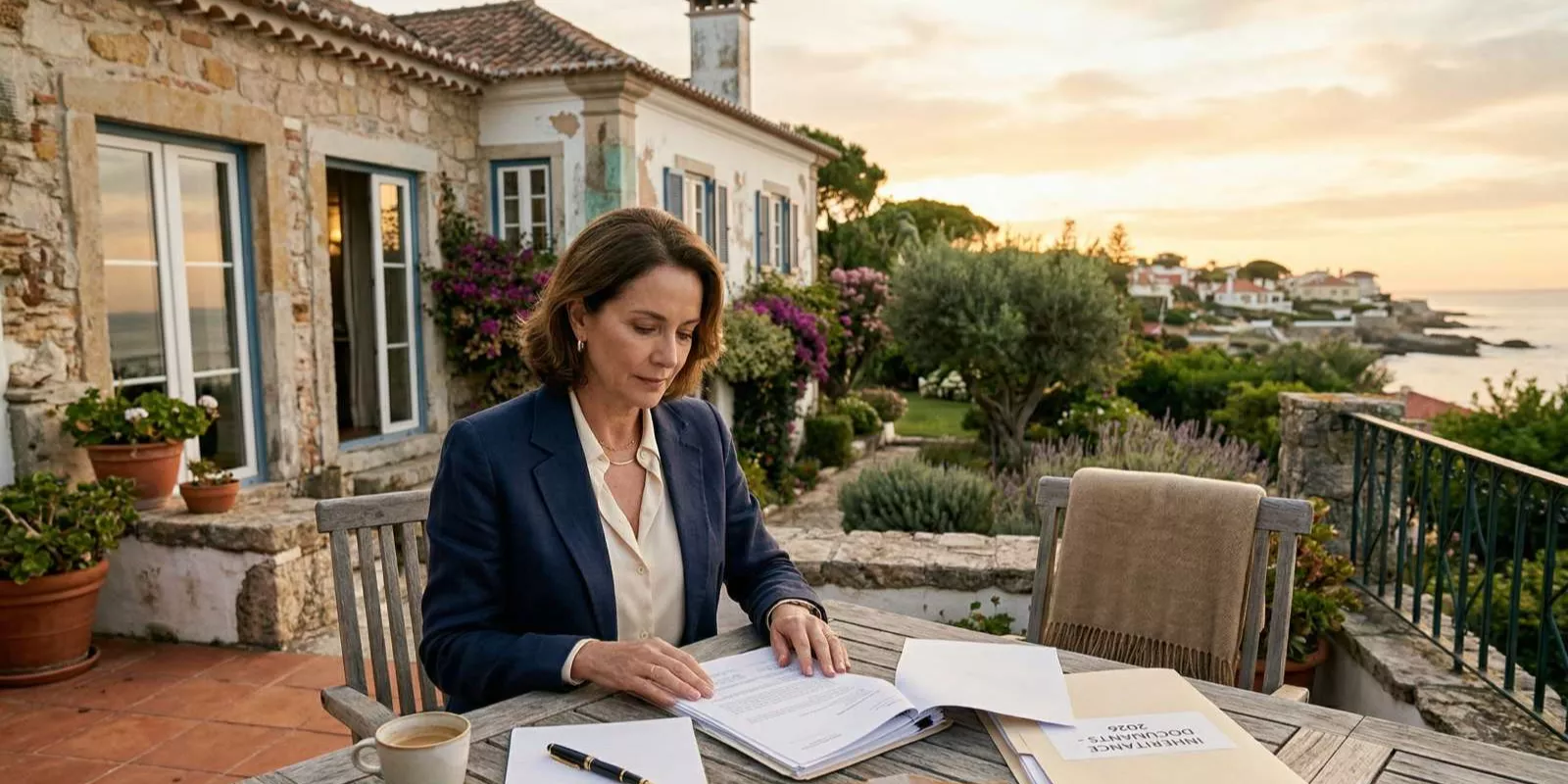
Selling an Inherited Property in Portugal starts with one key truth: inheriting a property and selling that property are two different tax events in Portugal. Close family members are usually exempt from Portuguese Stamp Duty on inheritance, but the later sale can still trigger capital gains tax and reporting duties.
That is why so many non-resident heirs get stuck. They assume “inheritance was tax-free, so the sale should be simple.” In practice, the risks usually appear later: missing inheritance records, confusion between estate division and property sale, delays caused by multiple heirs, and costly mistakes in capital gains reporting.
In this complete guide, you will see what to do first, which taxes matter, which documents you need, when all heirs must sign, and how to avoid the errors that cause the biggest delays and tax surprises. You will also see where non-resident heirs need specialist help, especially when the estate is still undivided or the heirs live in different countries.
RE/MAX Cidadela has worked in Cascais and the Lisbon area since 2004 and has helped thousands of families navigate sales, documentation, pricing, and negotiation. In inherited-property cases, that matters because the job is rarely “just sell the house.” It is usually part legal coordination, part document control, part tax awareness, and part market strategy.
TL;DR
Want to know whether you can sell now, what documents are missing, and where the tax risks are? Ask RE/MAX Cidadela for an inherited-property review before you put the home on the market.
Do you pay inheritance tax when you inherit property in Portugal?
Portugal does not have a traditional inheritance tax. Instead, it applies Stamp Duty (Imposto do Selo) on assets inherited in Portugal, generally at 10%, but close relatives such as spouses, descendants, and ascendants are usually exempt.
Key definition:
Stamp Duty is the tax that may apply when assets pass on death. Its purpose is to tax gratuitous transfers of property and other assets. The main features are a flat 10% rate when no exemption applies, exemptions for close family, and a declaration process linked to the inheritance. The main benefit of understanding this early is simple: you stop confusing the inheritance stage with the later sale stage.
Portugal usually exempts spouses, children, grandchildren, parents, and grandparents from Stamp Duty on inheritance, while non-exempt beneficiaries may pay 10% on inherited Portuguese assets. This is separate from any future capital gains tax when the property is sold.
Think of it like this: the tax system asks two different questions. First, “Who inherited the asset?” Later, “What happened when the asset was sold?” Those are not the same event, and they are not taxed the same way.
What is the difference between Stamp Duty and capital gains tax in Portugal?
Stamp Duty may apply when the property passes by death. Capital gains tax may apply later when the inherited property is sold. One taxes the transfer on death; the other taxes the gain on disposal.
In Portugal, inheriting a property and selling that property are separate tax moments. The inheritance may be exempt from Stamp Duty for close family, but the later sale can still generate taxable capital gains.
|
Tax |
When it matters |
Typical rule |
|
Stamp Duty |
When the estate passes on death |
10% unless exemption applies for close family |
|
Capital gains tax |
When the inherited property is sold |
Gain is broadly based on sale price minus acquisition value and eligible costs |
This distinction matters because many heirs plan the sale using only inheritance logic. That is where mistakes begin. A family may be exempt on inheritance and still owe tax later if the property is sold for more than the value used at inheritance, adjusted for eligible costs.
Can a non-resident sell inherited property in Portugal?
Yes. A non-resident can inherit and sell Portuguese property, but the sale must still follow Portuguese documentation, inheritance, registry, and tax rules. Cross-border reporting may also apply in the heir’s home country.
Non-residents can sell inherited property in Portugal, but they should not treat it as a normal resale. The sale often depends on inheritance records, ownership status, tax history, and coordination among heirs living in different countries.
Portugal remains highly relevant for international owners. Banco de Portugal said house-price growth has been sustained by demand from resident and non-resident foreign nationals, combined with tight supply and declining interest rates. That matters because timing, pricing, and buyer demand still influence whether an inherited sale should happen immediately or after preparation.
From our experience: many overseas heirs do not have a pricing problem first. They have a coordination problem first. The right question is not “What is the house worth?” The right first question is “Can we legally and cleanly sell it now?”
What happens first after inheriting a house in Portugal?
The first practical step is to identify the heirs and regularise the inheritance process. In Portugal, the Balcão Heranças service allows heirs to complete the habilitação de herdeiros and, where needed, the partition and registration of assets.
Habilitação de Herdeiros is the formal process that identifies who the heirs are. Its purpose is to establish legal heirship before dealing with inherited assets. Its main features are heir identification, support for estate registration, and linkage to later partition or registration steps. The main benefit is legal clarity: without it, a sale often cannot move forward safely.
In Portugal, heirs can use the Balcão Heranças to identify heirs, register inherited assets, and, if needed, complete partition. This is often the practical foundation for selling inherited property without later legal disputes.
A realistic order usually looks like this:
Can you sell before the estate is divided?
Sometimes yes, but only with proper coordination. If the estate remains undivided, the transaction is usually more complex and all relevant heirs may need to take part in the decision and signing process.
An undivided estate can delay an inherited-property sale because ownership is not yet allocated to one specific heir. In practice, this usually means more signatures, more legal checks, and more room for disagreement between heirs.
This is where deals slow down. One heir lives in London. Another is in Brazil. Another wants to keep the property. A buyer appears, but the paperwork is not ready. The market does not care that the family is still organising itself.
We have seen inherited sales lose momentum not because demand was weak, but because the estate structure was unclear. A clean file often adds more value than a rushed listing.
What is the difference between selling an inheritance share and selling the property itself?
In 2026, this became a critical distinction. Recent case-law harmonisation and alignment by the Portuguese Tax Authority clarified that selling an inheritance share (quinhão hereditário) is not the same as selling a specific inherited property.
Portuguese case-law harmonisation in 2026 clarified that the sale of an inheritance share is treated differently from the sale of a specific immovable asset. That distinction can materially affect whether personal income capital gains tax applies.
This is one of the most misunderstood points in the whole process. If someone sells a specific property from the inheritance, that is one thing. If someone transfers their share in the inheritance as a whole, the tax treatment may differ. This is not a DIY area. It needs legal and tax review before the transaction is structured.
Exper Tip
If a family dispute exists, do not assume the only route is “sell the house and split the money.” In some cases, the inheritance-share route may change the legal and tax analysis. The structure matters.
How is capital gains tax calculated on inherited property in Portugal?
Broadly, the gain is calculated using the sale price minus the acquisition value established at inheritance, adjusted for eligible costs. The exact outcome depends on facts, documents, ownership history, and the seller’s tax position.
For inherited property in Portugal, capital gains are broadly measured by comparing the sale price with the inheritance-based acquisition value, then adjusting for eligible documented costs such as certain improvements and sale expenses.
A simple example helps:
That example is simplified on purpose. Real cases often involve:
Watch out
A missing valuation, missing invoice, or unclear inheritance record can weaken your tax position later. Saving paperwork can save tax.
Which costs can reduce your taxable gain?
Documented improvement costs and transaction costs may reduce the taxable gain if they meet Portuguese legal requirements. The word to focus on is documented.
Eligible costs may reduce taxable gains on inherited property in Portugal, but only when they are properly documented and legally acceptable. Good records are not admin detail; they are part of your tax defence.
In practice, heirs should review:
If I were handling this as an owner, I would build the evidence file before listing, not after receiving an offer. Once a buyer is ready, you want negotiation leverage, not a scramble for paperwork.
What documents do you need to sell an inherited property in Portugal?
The core file usually includes the inheritance documentation plus the normal sale documentation. For the sale itself, common documents include the land registry certificate, tax property record, energy certificate, and proof of tax and utility status.
To sell inherited property in Portugal, you typically need both inheritance documents and standard property-sale documents. The sale cannot be treated as complete until ownership history and current property records align.
A working checklist:
What if there are multiple heirs or one heir refuses to sell?
Multiple-heir cases are common, and they are rarely solved by marketing alone. They require agreement, structure, and often legal sequencing before a property can be sold cleanly.
Inherited-property sales with multiple heirs are not mainly a real-estate challenge. They are a control challenge involving signatures, timing, expectations, and legal authority to proceed.
This is where an experienced local team matters. One person keeps the buyer informed. One person checks the document chain. One person aligns the family on timing and price. Without that, inherited sales often become emotional drift instead of a real process.
How long does it take to sell inherited property in Portugal?
It depends less on buyer demand than many heirs expect. The real timeline is often driven by heir identification, document readiness, estate division, and tax clarity before the property even goes live.
The biggest delay in inherited-property sales is often not the market. It is unresolved paperwork, unclear authority to sell, missing tax records, or lack of agreement between heirs.
In strong local markets, such as parts of Cascais and Lisbon, demand can still be there. Banco de Portugal has linked Portuguese residential price resilience to supply constraints and demand from residents and non-resident foreign nationals. But demand only helps after the file is ready.
When should you speak to a lawyer, tax adviser, and local estate agent?
Earlier than most people do. The best moment is before listing the property, not after accepting an offer.
Inherited-property sales work best when the legal, tax, and commercial sides are aligned before the listing goes live. A sale is faster when the structure is clean from day one.
Use this simple rule:
In reality, most non-resident heirs need all three.
Why work with RE/MAX Cidadela if you are selling inherited property in Portugal from abroad?
Because this kind of sale needs more than exposure. It needs coordination. A buyer may fall in love with the view, the garden, or the location. But the deal closes because the file is clean, the heirs are aligned, the pricing is right, and the sale is handled by people who know the local process.
At RE/MAX Cidadela, inherited-property cases are approached as full projects. That means checking the real readiness of the property, not just putting it online. It means spotting tax and documentation risks early, aligning the family, and building a sale plan that protects both timing and price.
FAQ
Is there inheritance tax in Portugal for non-residents?
Portugal does not use a traditional inheritance tax. Instead, it applies Stamp Duty, generally at 10%, but close relatives are usually exempt.
Do I pay capital gains tax if I sell an inherited house in Portugal?
Possibly yes. The sale of inherited property is generally a separate tax event, and the gain is broadly based on the sale price minus the inheritance-based acquisition value and eligible costs.
Can I sell inherited property before the estate is divided?
Sometimes, but it is more complex. If the estate is still undivided, coordination between heirs and proper legal structure are usually required.
What is the most common mistake non-residents make?
They assume inheritance and sale are taxed the same way. They are not. That misunderstanding causes many of the biggest errors.
What documents matter most before listing?
The inheritance record, ownership status, land registry certificate, tax property record, energy certificate, and evidence supporting the tax history of the property.
Conclusion: From Complexity to a Clean Sale
Selling inherited property in Portugal is rarely just a real estate transaction; it is a legal, tax, and family coordination project. If you get the structure right first, the sale becomes faster, safer, and often more profitable.
In the 2026 market, buyers are looking for "clean deals." They want properties where the paperwork is ready and the tax situation is clear. As an heir, your best strategy is to be the seller who has all the answers before the questions are even asked.
Don’t Manage the Stress from Afar Dealing with the Finanças, the Conservatória, and potential co-heirs from another country is exhausting. At RE/MAX Cidadela, we provide more than just a "For Sale" sign. We offer a local bridge for non-resident families, ensuring your inheritance is protected, valued, and successfully transitioned.
Your Next Practical Step: Before you list the property or sign any agreements, let us perform an Inherited-Property Readiness Review. We will help you identify:
Contact RE/MAX Cidadela Today for a Confidential Consultation Let us turn your Portuguese inheritance into your next successful chapter.
RE/MAX CIDADELA
Avenida 25 de Abril nº 722, Cascais.
Tel.+351 967604141. E-Mail: ppettermann@remax.pt
⭐️⭐️⭐️⭐️⭐️ 4.6 stars on Google Reviews | 180+ verified client reviews
📍 Local Specialists in:
----------------------------------
By Pedro Pettermann
Pedro Pettermann is a Broker at RE/MAX Cidadela in Cascais, with over 20 years of experience in the real estate market across the Cascais coastline, Lisbon, Oeiras, and Sintra. With an MBA from IE Business School, he combines strategic vision with deep local expertise. Recognized as a specialist in the real estate market, mortgage financing, and digital marketing, he helps owners and buyers make confident and profitable decisions.
At RE/MAX Cidadela, we have already helped more than 4,800 families successfully sell or buy the home of their dreams.
Buying a Home with a View in Lisbon: The Best Neighborhoods & Investment Insights
Imagine waking up in Lisbon to golden sunlight peeking through your window, revealing a living picture: the city's terracotta rooftops cascading down to the sparkling blue Tagus River. You feel a gentle breeze and smell fresh coffee and pastéis de nata from a nearby pastry shop. It’s more than a pre
Living in Oeiras: A comprehensive Guide
Oeiras is a picturesque coastal municipality located just 16 kilometers west of Lisbon, Portugal’s vibrant capital. Known for its blend of urban sophistication and serene coastal beauty, Oeiras has become one of the most desirable places to live in the Lisbon metropolitan area. With a population of
Top trending Luxury Neighborhoods in Cascais
The world of luxury living is constantly evolving, and 2024 brings exciting new trends to the forefront. But what does it take to secure a foothold in this exclusive market? Cascais, Portugal, has emerged as a global hotspot for luxury real estate, boasting a unique blend of breathtaking natural

