Living in Cascais Historic Centre: Lifestyle, Property Prices, Pros and Cons

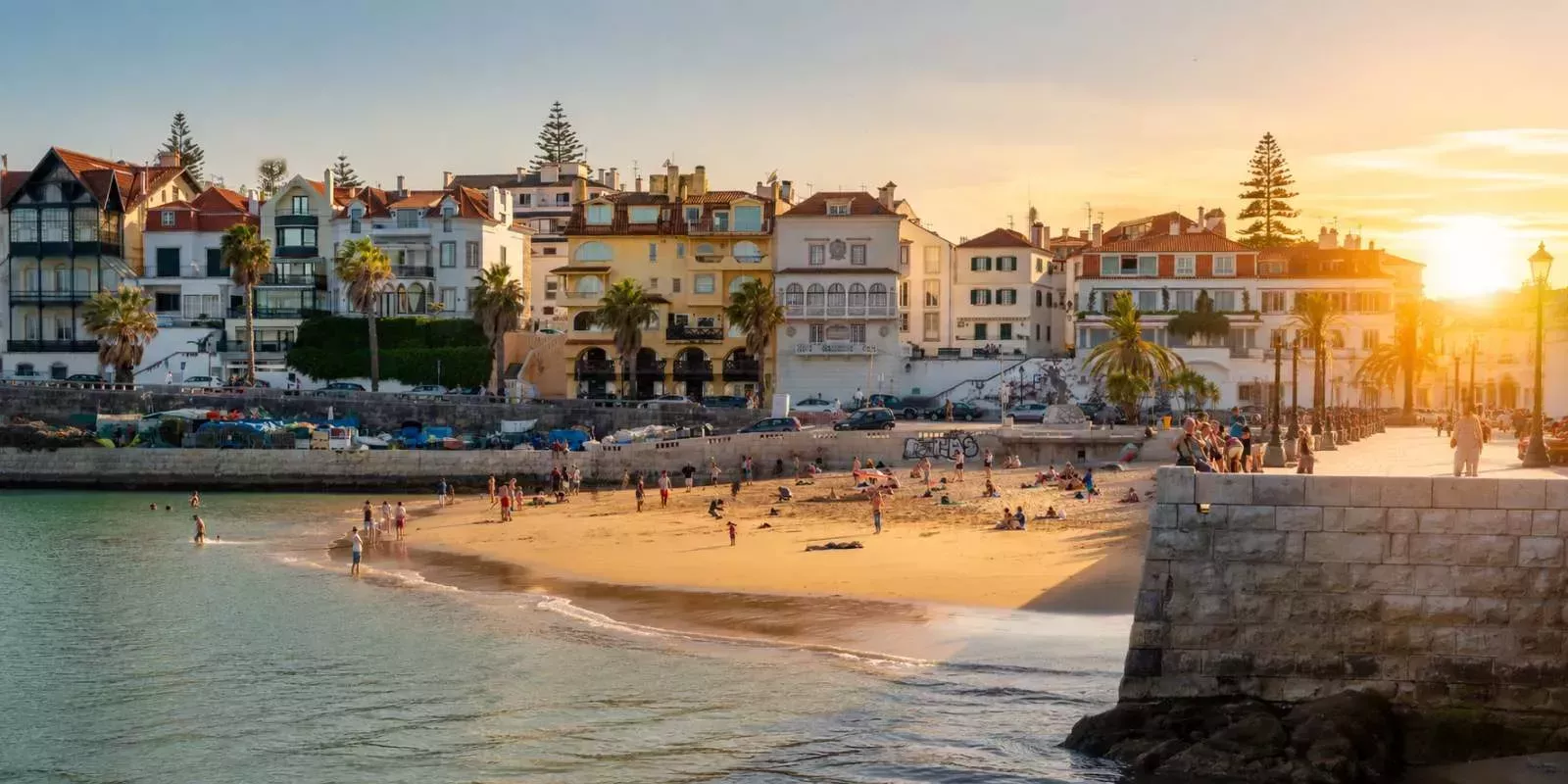
There is a particular sound to mornings in Cascais Historic Centre: café shutters opening, seagulls circling above the bay and fragments of Portuguese mixing with several other languages on the first terraces of the day.
But living here is different from spending a weekend in Cascais.
Behind the cobbled streets, beaches and pastel-coloured façades lies a real neighbourhood with practical advantages, property limitations and seasonal changes that buyers should understand before choosing a home.
Cascais Historic Centre is best suited to people who value walkability, access to the sea, restaurants and public transport more than large interiors, private gardens or easy parking. For the right buyer, that trade-off is precisely what makes the area special.
Quick Summary
Is Cascais Historic Centre a Good Place to Live?
For people who want to walk to the beach, buy fresh food locally, meet friends without driving and travel to Lisbon by train, the historic centre is one of the most practical places to live in Cascais.
The centre is compact. Praia da Ribeira, Praia da Rainha, the marina, Mercado da Vila, the railway station and many of the town’s restaurants are within a relatively small area.
This convenience can change everyday routines. A morning swim, lunch outside, shopping and an evening walk along the bay do not need to be planned as separate car journeys. They can simply become part of daily life.
However, buyers should not confuse walkability with tranquillity. The most central pedestrian streets are also the most active, particularly during summer evenings, weekends and major events.
The best location within the centre therefore depends on what the buyer wants to hear when opening the windows: street life, the sea, local traffic or almost nothing at all.
From Fishing Village to Royal Summer Retreat
Cascais developed around fishing and maritime activity long before it became associated with tourism and luxury property.
A decisive change occurred in 1870, when King Luís I adapted part of the Citadel as a royal summer residence. The presence of the Portuguese royal family attracted members of the aristocracy and helped transform Cascais into a fashionable seaside destination.
That history remains visible in the contrast between modest traditional buildings, larger townhouses, the Citadel and late-19th-century architecture.
The centre is not a perfectly preserved historical district. Renovated apartments, hotels, traditional shops, international restaurants and local services exist side by side. That mixture helps Cascais retain the feeling of a functioning town rather than becoming only an open-air museum.
What Does Everyday Life Feel Like?
Rua Frederico Arouca is the centre’s best-known pedestrian street, with restaurants, cafés, shops and a constant flow of residents and visitors.
Praça 5 de Outubro, facing the Town Hall and the bay, acts as one of Cascais’s main meeting points. Nearby, smaller streets lead towards Praia da Rainha, the marina, the Citadel and the cultural area around Parque Marechal Carmona.
Mercado da Vila remains an important part of local life. It includes fish, meat, fruit, vegetables, organic products, flowers, restaurants and periodic markets rather than operating only as a tourist attraction.
Cascais also has an unusually concentrated cultural offer for a town of its size. The Museum Quarter includes the Casa das Histórias Paula Rego, Museu Condes de Castro Guimarães, Museu do Mar, Casa de Santa Maria, Santa Marta Lighthouse Museum and other cultural spaces.
This combination of culture, food, beaches and public space is one reason the centre appeals to international residents who want an active lifestyle without living in a large city.
Can You Live in Central Cascais Without a Car?
Yes. Cascais Historic Centre is one of the easiest places in the municipality to live without depending on a car.
The railway station is located at the edge of the centre. Current CP timetables generally place the journey between Cascais and Lisbon’s Cais do Sodré at around 40 minutes, depending on the service.
From Cais do Sodré, residents can connect with the Lisbon Metro, buses and ferries. This makes the centre practical for hybrid workers who travel to Lisbon several times a week, although it may be less convenient for a daily commute to areas far from the railway line.
Local buses connect Cascais with other parts of the municipality, while cycling and walking are realistic options for shorter journeys.
Parking remains the main difficulty
Owning a car is possible, but buyers should investigate parking before purchasing rather than treating it as a detail to solve later.
Street parking is regulated and availability varies considerably by location and time of year. Cascais residents with the Viver Cascais card currently have access to certain mobility and parking benefits, but these do not guarantee a space beside the property.
A private garage, parking space or reliable nearby car park can therefore add significant practical value to a central property.
How Much Does Property Cost in Cascais Historic Centre?
Cascais is one of Portugal’s most expensive residential municipalities. According to Statistics Portugal, the median transaction price in Cascais reached €4,654 per square metre in 2025, compared with €5,198 per square metre in Lisbon and €4,225 in Oeiras.
However, this municipal median should not be used as an automatic valuation for a property in the historic centre.
The Cascais municipality includes very different markets, ranging from central apartments and coastal properties to suburban homes, villas and inland locations. Even inside the centre, two apartments on nearby streets may have substantially different values.
The price of a central Cascais property is strongly influenced by:
Renovated apartments with lifts, outdoor space, good light and parking are relatively scarce and may command a considerable premium. Older apartments without lifts or parking may appear more affordable but can require compromises that reduce their appeal on resale.
For this reason, buyers should compare completed transactions and genuinely comparable properties rather than relying only on the advertised price per square metre.
What Types of Property Can You Find?
The historic centre does not offer a standard property type. Buyers may encounter:
Traditional charm can hide practical limitations. Narrow staircases, irregular layouts, small windows and limited storage are relatively common.
Buyers attracted by decorative tiles, wooden floors or an old façade should also examine how the property functions in everyday life. Character is valuable, but it does not replace natural light, insulation, legal compliance or comfortable access.
What Should You Check Before Buying an Older Property?
Older buildings require more careful technical and legal due diligence than a visual visit may suggest.
Humidity and exposure to the sea
Coastal air can affect walls, windows, metalwork and façades. Signs of recent painting should not automatically be interpreted as proof that a humidity problem has been resolved.
Thermal and acoustic insulation
Traditional buildings may have attractive solid walls but weak windows, roofs or insulation. Buyers should visit at different times to understand street noise and internal temperature.
Roofs, façades and common areas
The apartment may be renovated while the condominium still faces substantial work. Review meeting minutes, planned projects, unpaid condominium fees and the reserve fund before committing.
Previous renovation work
Confirm that alterations to the layout, enclosed balconies, mezzanines or extensions are legally documented. A beautiful renovation is not necessarily a legally compliant renovation.
Lift and accessibility
Many traditional buildings do not have lifts. This may not concern a young buyer today, but it can affect long-term comfort, rental demand and resale.
Parking and access
Check where residents actually park, whether access changes during events and how removals, deliveries or building work can be carried out.
A technical inspection and document review are particularly important when the property has been extensively remodelled or is located in a building with shared maintenance issues.
Advantages and Disadvantages
|
Advantages |
Possible disadvantages |
|
Beaches, shops and restaurants within walking distance |
Limited and often paid parking |
|
Easy access to Cascais railway station |
More visitors during summer |
|
Strong architectural character |
Some buildings have no lift |
|
Suitable for living without a car |
Smaller interiors and less storage |
|
Active cultural and social life |
Restaurant or street noise |
|
Appealing to international buyers |
Older buildings may require maintenance |
|
Convenient lock-up-and-leave lifestyle |
Gardens and large terraces are scarce |
Cascais Historic Centre Compared with Other Areas
The centre is not automatically the best area for every buyer.
|
Area |
Lifestyle |
Typical property profile |
|
Historic Centre |
Walkable, lively and close to beaches, restaurants and trains |
Apartments and townhouses, often with limited parking |
|
Monte Estoril |
Residential, elegant and well connected to Cascais and Estoril |
Apartments, period homes and some sea views |
|
Bairro do Rosário |
Quieter and family-oriented, while remaining close to the centre |
Larger apartments and homes with easier parking |
|
Birre |
Low-density and suburban |
Villas, gardens and more private space |
|
Quinta da Marinha |
Exclusive, private and leisure-focused |
Premium villas and gated developments |
|
Alvide or Alcabideche |
More practical and generally less tourist-oriented |
Wider variety of apartments and houses |
The decision is therefore less about identifying the “best” area and more about choosing which compromises suit the buyer’s routine.
Who Is the Historic Centre Best Suited To?
Cascais Historic Centre tends to work particularly well for:
It may be less suitable for families requiring several bedrooms, a large garden, multiple cars or absolute tranquillity.
Families can live comfortably in the centre, but they should compare the available space and parking with alternatives such as Bairro do Rosário, Birre or Alvide before deciding.
Local Insight from RE/MAX Cidadela
In our experience, international buyers often begin their search by focusing almost entirely on distance from the beach.
After visiting properties, other factors usually become just as important: evening noise, lift access, natural light, parking, humidity and the condition of the building.
An apartment two streets away from the busiest pedestrian area may provide almost the same walkability while offering noticeably more privacy and tranquillity. Conversely, a buyer seeking atmosphere and convenience may prefer to remain directly inside the most active part of town.
The correct choice depends on how the property will be used, not only on how attractive the street appears during a daytime viewing.
Frequently Asked Questions
Is Cascais Historic Centre good for expats?
Yes. Its walkability, railway connection, international community and access to services make it one of the easiest areas for foreign residents to adapt to. Learning Portuguese is still valuable for integration and for dealing with administrative or property matters.
Is the centre noisy?
Some streets can be noisy, particularly near restaurants, terraces and traffic routes during summer. Properties located a short distance from the busiest streets may offer a better balance between access and tranquillity.
Can I live there without a car?
Yes. Most daily needs can be handled on foot, and the railway provides direct access to Lisbon. A car remains useful for international schools, inland areas, larger shopping trips and destinations not served by the railway.
Are old properties in Cascais a good investment?
They can be, especially when they combine character with good light, legal renovation, lift access or outdoor space. However, building condition and future condominium costs must be considered before calculating the real return.
Is the historic centre suitable for families?
It can be, especially for families who value independence, walking and access to services. Those requiring larger homes, gardens and easier parking should compare it with more residential neighbourhoods.
Should I rent before buying?
Renting can be useful for buyers who do not know the area well. Ideally, experience both the busier summer period and the quieter winter months before making a long-term decision.
The Honest Verdict
Living in Cascais Historic Centre means accepting less space, more seasonal activity and higher property values in exchange for an unusually convenient coastal lifestyle.
The beach, market, station, cafés, museums and restaurants can all become part of an ordinary day rather than activities requiring a journey.
For buyers who value that freedom, the premium may be justified. For those who need silence, a large garden, several parking spaces or significantly more interior space, another Cascais neighbourhood may provide better value.
The most important decision is not simply whether to live in Cascais. It is whether the rhythm and compromises of its historic centre match the life you actually want to lead.
Before buying, visit the street at different times, examine the building as carefully as the apartment and compare the property with alternatives in Monte Estoril, Bairro do Rosário and Birre.
RE/MAX Cidadela has supported property owners and buyers in Cascais since 2004. Our team can help you compare neighbourhoods, analyse recent market evidence, review the buying process and identify properties that match both your budget and your intended lifestyle.
Download our Buyer’s Guide or request a personalised property search before arranging your visits.
RE/MAX CIDADELA
Avenida 25 de Abril nº 722, Cascais.
Tel.+351 967604141. E-Mail: ppettermann@remax.pt
⭐️⭐️⭐️⭐️⭐️ 4.6 stars on Google Reviews | 190+ verified client reviews
Local Specialists in:
----------------------------------
👤About the Author
By Pedro Pettermann
Pedro Pettermann is a Broker at RE/MAX Cidadela in Cascais, with over 20 years of experience in the real estate market across the Cascais coastline, Lisbon, Oeiras, and Sintra. With an MBA from IE Business School, he combines strategic vision with deep local expertise. Recognized as a specialist in the real estate market, mortgage financing, and digital marketing, he helps owners and buyers make confident and profitable decisions.
At RE/MAX Cidadela, we have already helped more than 4,800 families successfully sell or buy the home of their dreams
Portugal Buyer´s Agent by RE/MAX Cidadela
A Buyer's Agent is a real estate professional who exclusively represents the buyer's interests in a property transaction. Unlike traditional real estate agents who often work on behalf of the seller, a Buyer's Agent focuses solely on securing the best possible deal for the buyer
D7 Visa Portugal – Visa for Retirees, Pensioners or Investors
The Temporary Residence Visa, also known as the D7 Visa, is one of the most popular options for non-EU/EEA citizens planning to live in Portugal without working locally. This visa is ideal for retirees, investors, and people with passive income. With the D7, you don’t need to invest large amounts of
Buying Property in Portugal: A Complete Guide for Foreign Buyers
Foreign citizens can buy property in Portugal without holding Portuguese residency or obtaining a special purchase permit. However, finding a home is only the first part of the process. Before making an offer, buyers need to understand how much cash they will actually require, whether they can

