Cost of Living in Cascais, Portugal: A Realistic Budget Guide

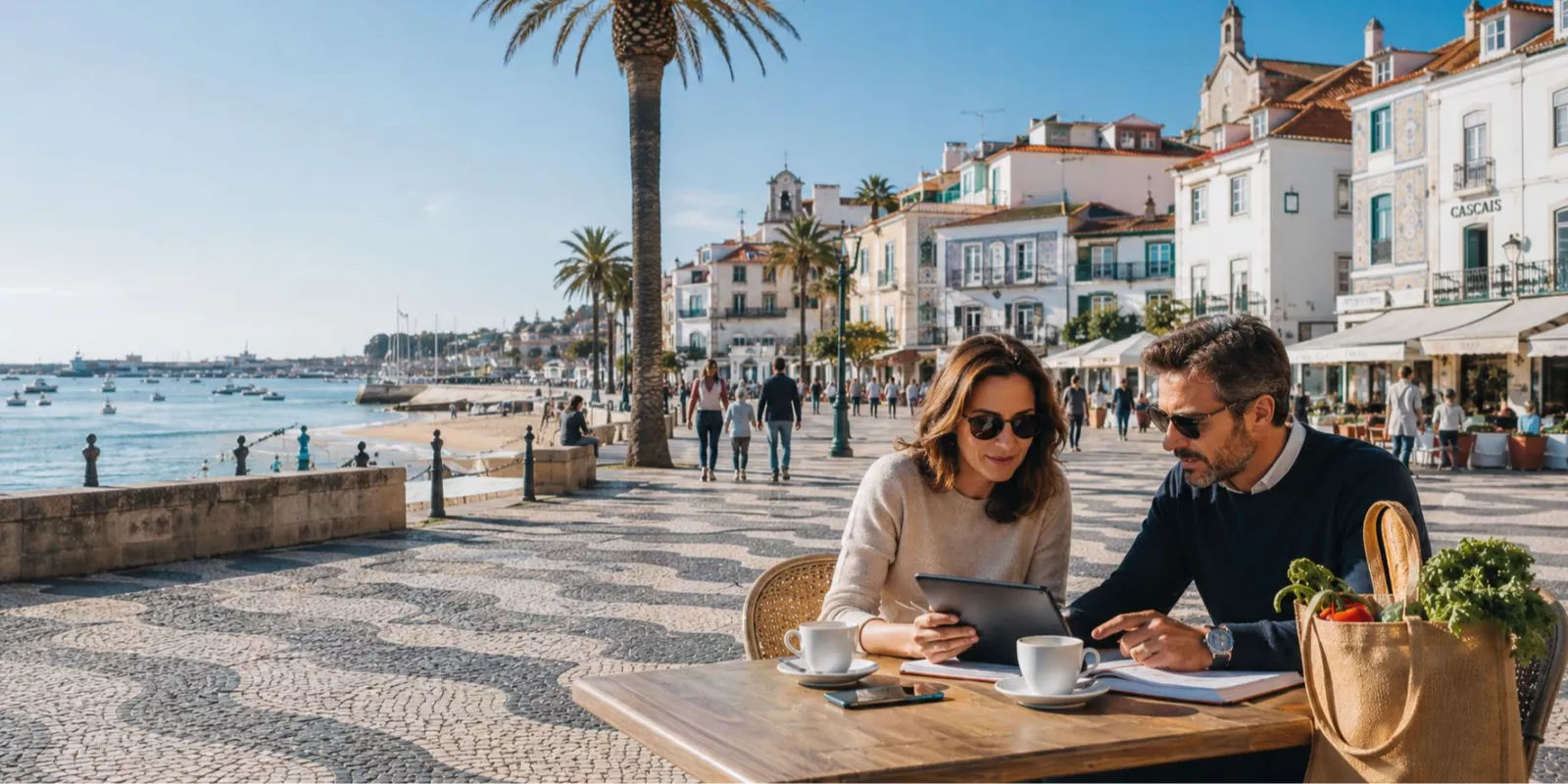
How much does it cost to live in Cascais in 2026? A single person renting alone should generally budget between €1,700 and €3,000 per month, while a couple may need approximately €2,500–€4,500. A family using Portuguese public schools can expect to spend around €3,800–€6,500, but the monthly budget may rise above €6,000 when international school fees are included.
These figures are useful starting points, but there is no single cost of living that applies to the entire Cascais municipality. Living within walking distance of the historic centre is very different from renting a family apartment in Parede, choosing a villa in Alcabideche or commuting from Carcavelos. Housing, school access and dependence on a car usually create much larger budget differences than groceries or restaurant prices.
RE/MAX Cidadela has worked in the Cascais property market since 2004, supporting buyers, property owners and relocating families across Cascais, Estoril, Alcabideche, Parede and Carcavelos. This local experience allows us to compare not only advertised property prices, but also the practical costs that affect everyday life: commuting, school journeys, parking, winter energy consumption and the amount of space different budgets can realistically secure.
This guide combines current published cost and housing data with our direct experience of the local market. It explains what a single person, a couple and a family should realistically budget, which areas tend to offer better value and which expenses people frequently underestimate before moving.
Quick summary
Is Cascais expensive to live in?
Cascais is expensive by Portuguese standards, principally because of housing. Its coastline, proximity to Lisbon, international schools, perceived quality of life and strong demand from Portuguese and foreign residents place pressure on both rents and purchase prices.
However, “expensive in Portugal” does not mean every part of daily life is exceptionally expensive. Once housing is covered, supermarket shopping, public transport, local restaurants and routine services can remain manageable compared with many affluent coastal locations in Western Europe.
The most important budgeting mistake is therefore to apply one generic “Cascais cost” to the entire municipality. A walkable apartment near the historic centre, a house in Birre and a flat in São Domingos de Rana involve very different budgets and transport needs.
Housing costs in Cascais in 2026
Idealista’s July 2026 data placed the average asking rent across Cascais municipality at approximately €21.10 per square metre per month. These are advertised prices, not necessarily the final rents agreed in signed contracts.
The June 2026 area breakdown also showed meaningful differences: approximately €21.70/m² in Cascais and Estoril combined, €19.80/m² in Carcavelos and Parede, and €17.00/m² in Alcabideche.
For practical planning, long-term rental budgets often fall within these ranges:
|
Property |
Prime or central locations |
Better-value locations |
|
Studio or 1-bedroom |
€1,300–€1,900 |
€900–€1,400 |
|
2-bedroom |
€1,900–€2,900 |
€1,400–€2,100 |
|
3-bedroom |
€2,800–€4,500+ |
€2,000–€3,200 |
“Prime” includes central Cascais, Monte Estoril, the seafront and particularly desirable residential pockets. Better-value options may be found in Alcabideche, parts of Parede, Carcavelos and São Domingos de Rana, although condition, parking, outdoor space and proximity to the train can change the price substantially.
Which parts of Cascais offer better value?
|
Area |
Typical cost position |
Best suited to |
Main compromise |
|
Central Cascais and Monte Estoril |
Very high |
Residents prioritising walkability, coast and restaurants |
Less space for the same budget |
|
Estoril |
High |
Families and professionals wanting coast and rail access |
Large price differences between micro-locations |
|
Carcavelos and Parede |
Medium-high |
Commuters and families seeking a coastal alternative |
Farther from central Cascais |
|
Alcabideche |
Often more accessible for apartments |
Families prioritising space and road access |
Greater dependence on a car or bus |
|
São Domingos de Rana |
Generally more affordable |
Value-conscious households |
Less of the classic Cascais resort lifestyle |
Alcabideche should not automatically be treated as “cheap”. The wider parish includes both relatively accessible apartment areas and expensive low-density villa locations. Birre, in particular, can command premium prices.
For buyers, Idealista reported a Cascais-wide asking price of approximately €5,660/m² in July 2026. The June area data ranged from around €4,033/m² in São Domingos de Rana and €4,696/m² in Alcabideche to €6,901/m² in Cascais and Estoril. Again, these are asking prices rather than final transaction values.
Utilities, internet and mobile phones
For an apartment, a sensible planning range for electricity, water and gas is €100–€200 per month, although a large or poorly insulated property can cost more. Winter is often the surprise: many Portuguese homes lack central heating, and electric heaters can materially increase the bill.
Broadband internet commonly costs €35–€65 per month, while mobile plans vary according to data and bundled services. Crowdsourced Cascais data published in July 2026 placed basic utilities for an 85 m² apartment at around €120 per month, but the number of occupants, insulation and heating habits matter more than the city average.
Before renting or buying, ask about the energy certificate, window quality, solar exposure and heating system. A cheaper home with poor insulation can become more expensive to live in.
Groceries and eating out
A single adult may spend around €250–€400 per month on groceries. A couple can reasonably plan for €400–€650, while a family of four may spend €650–€1,000, depending on diet, brands and how often they eat at home.
Local supermarkets and traditional markets are usually more economical than premium or imported-food shops. Cascais data collected in 2026 indicated around €12–€20 for a meal at an inexpensive restaurant and a broad €40–€90 range for a mid-range dinner for two, excluding drinks. Because these figures are crowdsourced, they should be treated as orientation rather than fixed prices.
Transport: can you live in Cascais without a car?
Living without a car is realistic in central Cascais, Estoril, Parede and Carcavelos when the home is close to the railway, shops and schools. In inland areas, a car may be far more useful and can add fuel, insurance, maintenance, tolls and parking to the monthly budget.
The standard Navegante Metropolitano pass costs €40 per month and covers public transport across the Lisbon Metropolitan Area. Within Cascais, municipal buses are free for eligible residents, workers and students holding the Viver Cascais card.
The Cascais railway line connects the coast with Cais do Sodré in Lisbon. However, modernisation works were affecting parts of the line in summer 2026, including replacement road services, so commuters should verify the current CP timetable rather than relying on a standard journey estimate.
Healthcare and private insurance
Legal residents can obtain an SNS user number and access Portugal’s public healthcare system. Many international residents also choose private insurance or a health plan to obtain faster access to selected specialists and private hospitals.
Private cover varies significantly with age, medical history, exclusions and reimbursement level. A younger adult might budget roughly €40–€100 per month, while older applicants or comprehensive policies may cost considerably more. Always request a personalised quotation rather than relying on a generic average.
International schools: the cost families must calculate early
International education can change a family budget more than groceries, transport and utilities combined.
For the 2026/27 academic year, TASIS Portugal publishes annual tuition ranging from €13,007 in pre-kindergarten to more than €23,000 in upper grades, before some additional costs. Other schools serving the Cascais area publish their own fee schedules, with registration, transport, meals, capital charges or extracurricular activities potentially charged separately.
A useful planning range is therefore €1,000–€2,200+ per child per month when annual tuition and compulsory extras are spread across the year. Two children may add €2,000–€4,400+ per month.
Portuguese public schools do not charge tuition, but teaching is principally in Portuguese. School availability, language support, travel time and the child’s age should be assessed before selecting a home.
Realistic monthly budgets
|
Household |
Housing and normal living costs |
School costs |
Estimated total |
|
Single person |
€1,700–€3,000 |
— |
€1,700–€3,000 |
|
Couple |
€2,500–€4,500 |
— |
€2,500–€4,500 |
|
Family of four, public school |
€3,800–€6,500 |
No tuition |
€3,800–€6,500 |
|
Family, one child in international school |
€3,800–€6,500 |
€1,000–€2,200+ |
€4,800–€8,700+ |
|
Family, two children in international school |
€3,800–€6,500 |
€2,000–€4,400+ |
€5,800–€10,900+ |
These are comfortable planning ranges rather than minimum survival budgets. They assume long-term housing, normal household spending and some leisure, but not a luxury lifestyle, frequent international travel or substantial mortgage repayments.
The costs people most often underestimate
From a relocation perspective, the biggest surprises are rarely supermarket prices. They are usually the deposit and advance rent required to secure a home, school enrolment charges, winter electricity, buying and maintaining a car, and paying a premium to live close to both a preferred school and the coast.
Another common mistake is choosing the property before testing the daily routine. A home that appears cheaper may create two long school journeys, daily car use and higher energy costs. Renting for six to twelve months can allow a family to understand the municipality before making a long-term purchase.
Frequently asked questions
How much does one person need to live in Cascais?
A person renting alone should normally plan for around €1,700–€3,000 per month. Sharing a property or living farther inland can reduce the total considerably.
How much does a couple need?
A realistic couple’s budget is approximately €2,500–€4,500 per month, including rent. The chosen property accounts for most of the difference.
Is Cascais more expensive than Lisbon?
It depends on the neighbourhood and the type of home. Prime Cascais can cost more than many Lisbon districts for equivalent space, while Lisbon’s most prestigious central areas may have higher prices per square metre. Everyday costs are broadly comparable.
Can a family live in Cascais for €5,000 per month?
Yes, particularly with public schooling and a carefully selected rental. With two children in international school, €5,000 is likely to be restrictive unless housing costs are unusually low.
Where is it cheaper to live within Cascais municipality?
São Domingos de Rana and parts of Alcabideche generally offer better value than central Cascais, Monte Estoril and the seafront. Carcavelos and Parede can provide a middle ground between coastal access and cost.
How this guide was calculated
Housing data was reviewed using Idealista asking-price reports for June and July 2026. Everyday-cost ranges were checked against current transport tariffs, official school fee schedules and recent crowdsourced Cascais data. The household budgets combine these sources with practical local market experience.
Because advertised prices, signed rents and individual lifestyles differ, use the figures as a decision framework and confirm exact housing, school, insurance and transport costs before moving.
Planning a move to Cascais?
The right budget depends less on a generic cost-of-living average than on three decisions: where you live, whether you need international schooling and whether your daily routine requires a car.
RE/MAX Cidadela has assisted buyers and families in Cascais since 2004. Speak with our local team for a realistic, no-obligation discussion about neighbourhoods, property costs and the budget your move is likely to require.
Planning to buy once you've settled on a budget? Download our Buyer's Guide to Cascais
Data last reviewed: August 2026. All figures are indicative planning ranges rather than fixed quotations. Housing costs vary according to the exact location, property condition, lease terms and market availability.
RE/MAX CIDADELA
Avenida 25 de Abril nº 722, Cascais.
Tel.+351 967604141. E-Mail: ppettermann@remax.pt
⭐️⭐️⭐️⭐️⭐️ 4.6 stars on Google Reviews | 190+ verified client reviews
Local Specialists in:
----------------------------------
👤About the Author
By Pedro Pettermann
Pedro Pettermann is a Broker at RE/MAX Cidadela in Cascais, with over 20 years of experience in the real estate market across the Cascais coastline, Lisbon, Oeiras, and Sintra. With an MBA from IE Business School, he combines strategic vision with deep local expertise. Recognized as a specialist in the real estate market, mortgage financing, and digital marketing, he helps owners and buyers make confident and profitable decisions.
At RE/MAX Cidadela, we have already helped more than 4,800 families successfully sell or buy the home of their dreams
Moving to Portugal from USA: Your Guide by RE/MAX
Considering a move to Portugal from the United States? The benefits are numerous and compelling. U.S. citizens can enjoy significant advantages such as affordable healthcare, a lower cost of living, and a high standard of living in this picturesque European country.
The Best Universities in Lisbon and Cascais
With several renowned universities, Lisbon and Cascais attract students from all over the world. This article explores the best universities in Lisbon and Cascais, highlighting their features, academic programs, and reputation
Is Now a Good Time to Buy a €1M+ Home in Lisbon or Cascais? What the 2026 Data Really Shows
Portugal entered 2026 after a record year for residential property. Prices rose sharply, transaction value reached a new high and international demand remained visible. Yet buyers looking above €1 million in Lisbon or Cascais are not operating in exactly the same market as the average Portuguese buy

